NVIDIA Equity Research
A full investment thesis on NVIDIA combining industry research, expert interviews, a driver-based operating model, scenario valuation, and a clear recommendation.
- Role
- Lead analyst and presenter
- Context
- Fall 2025 · FIN 535 Applied Equity Research; presented to a panel of investors
- Team
- Independent thesis with expert input
- Deliverable
- Stock pitch + financial model
Summary
The question
The question was whether NVIDIA’s premium valuation was still justified after extraordinary AI-driven growth. The analysis had to separate durable competitive advantage from enthusiasm already reflected in the share price.
What I did
- Built an operating view around accelerated-computing demand, the CUDA and networking ecosystem, enterprise adoption, supply constraints, and power availability.
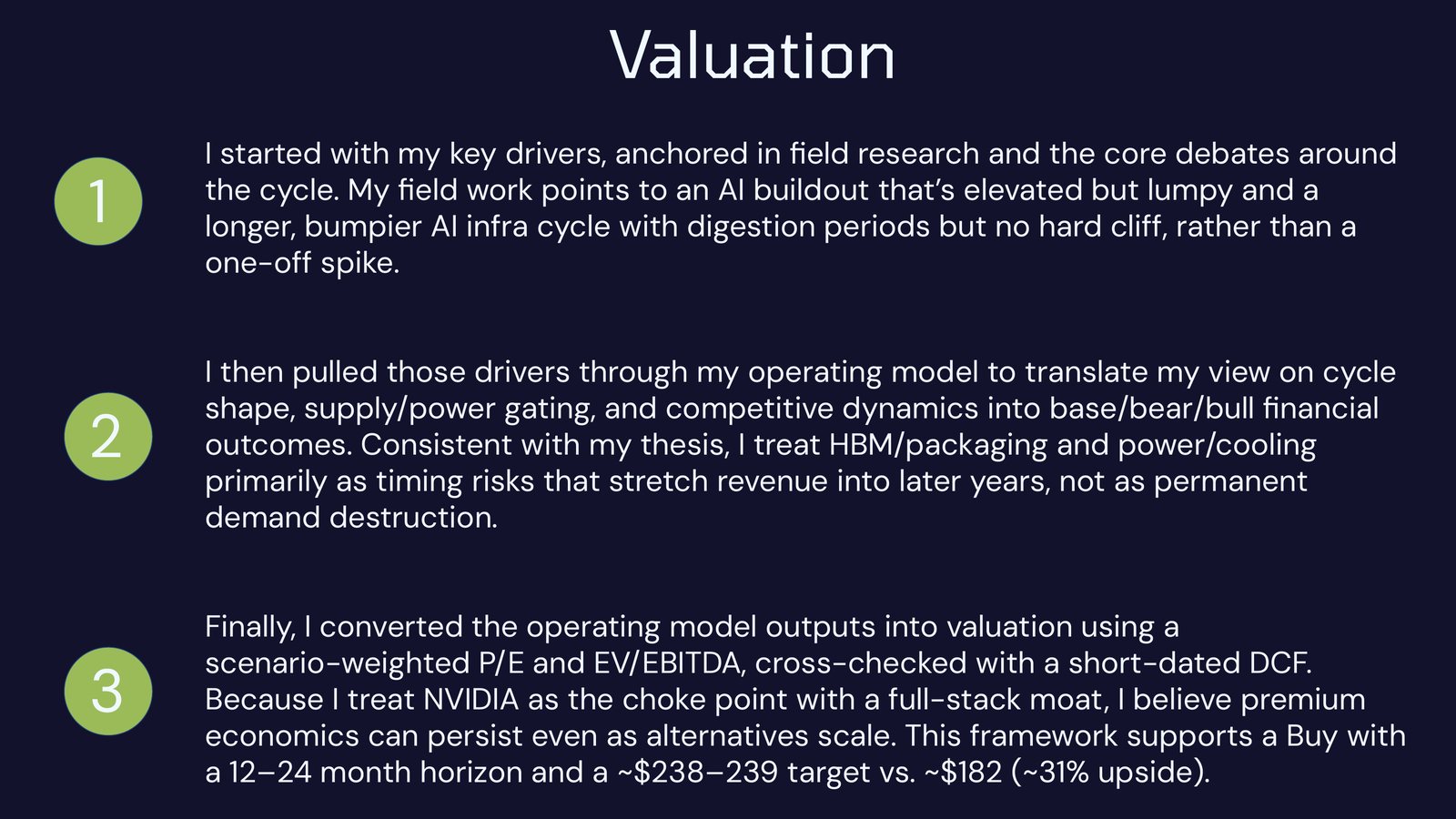
- Triangulated valuation with scenario-weighted P/E and EV/EBITDA methods, a DCF cross-check, comparable companies, and precedent transactions.
- Pressure-tested the thesis through six industry conversations and explicit bull, base, and bear assumptions before presenting a formal recommendation.
What it showed
The strongest investment case connected the model to the few variables that could change the outcome: AI infrastructure demand, ecosystem durability, supply, and adoption.
From the work
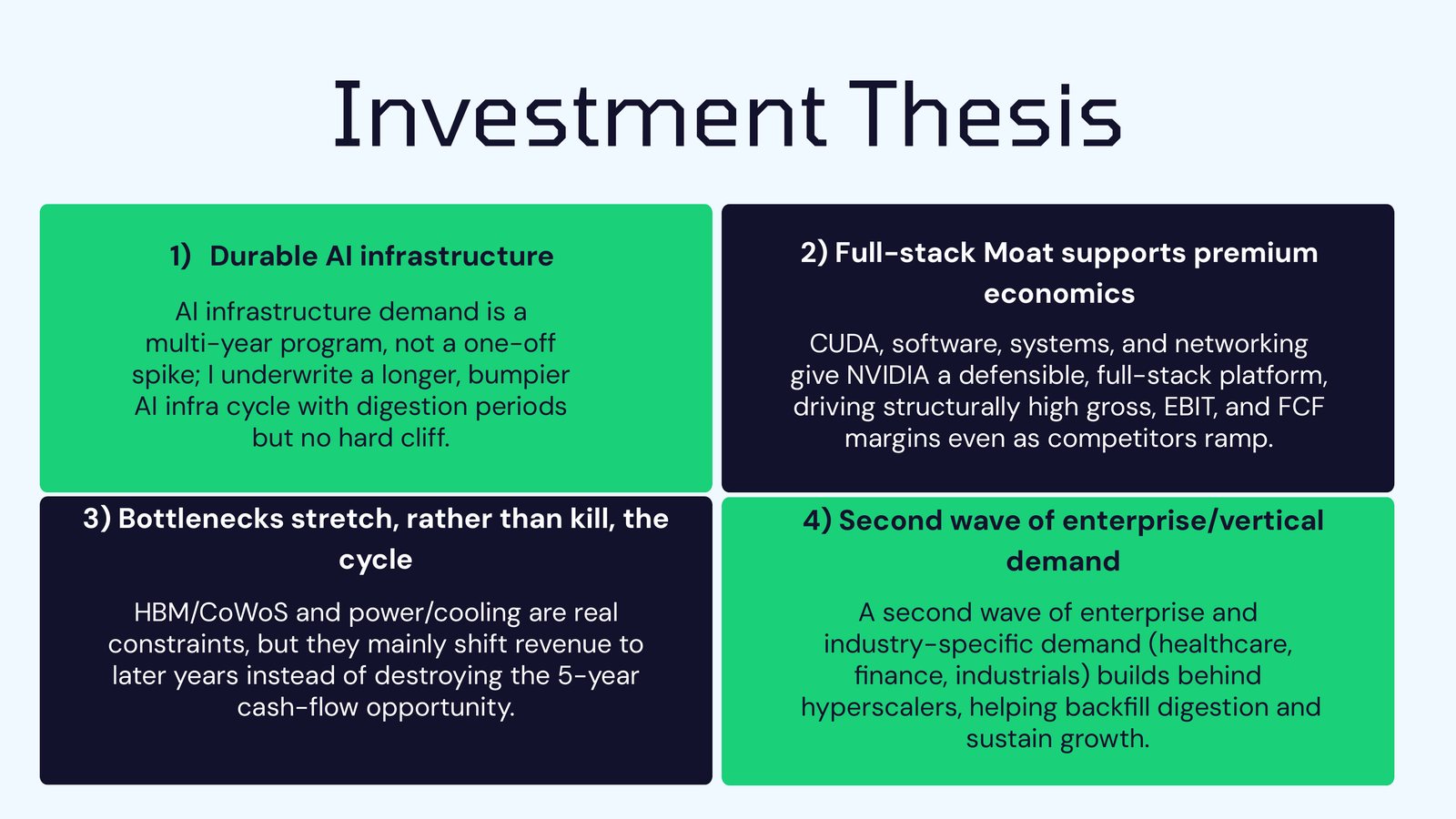
NVIDIA is the leading provider of accelerated computing hardware and software for AI and high-performance workloads. The stock has recently been re-rated for AI on the first phase of the larger AI infrastructure boom, but I believe the market still underestimates 1) how durable AI infrastructure demand will be, 2) how much pricing power NVIDIA’s full-stack platform provides relative to competitors, 3) the extent to which supply, power and integration constrain the near term, and 4) the incremental demand from enterprises and verticals beyond hyperscalers.
Final research memo, December 2025
Charts and slides
| Scenario | Price | Weight | What it assumes |
|---|---|---|---|
| Bull | $246.54 | 90% | Continued AI capex “arms race,” strong data-center growth, premium multiples |
| Base | $189.93 | 5% | Strong but maturing AI cycle, modest multiple compression |
| Bear | $142.91 | 5% | AI digestion period, more aggressive pricing pressure |
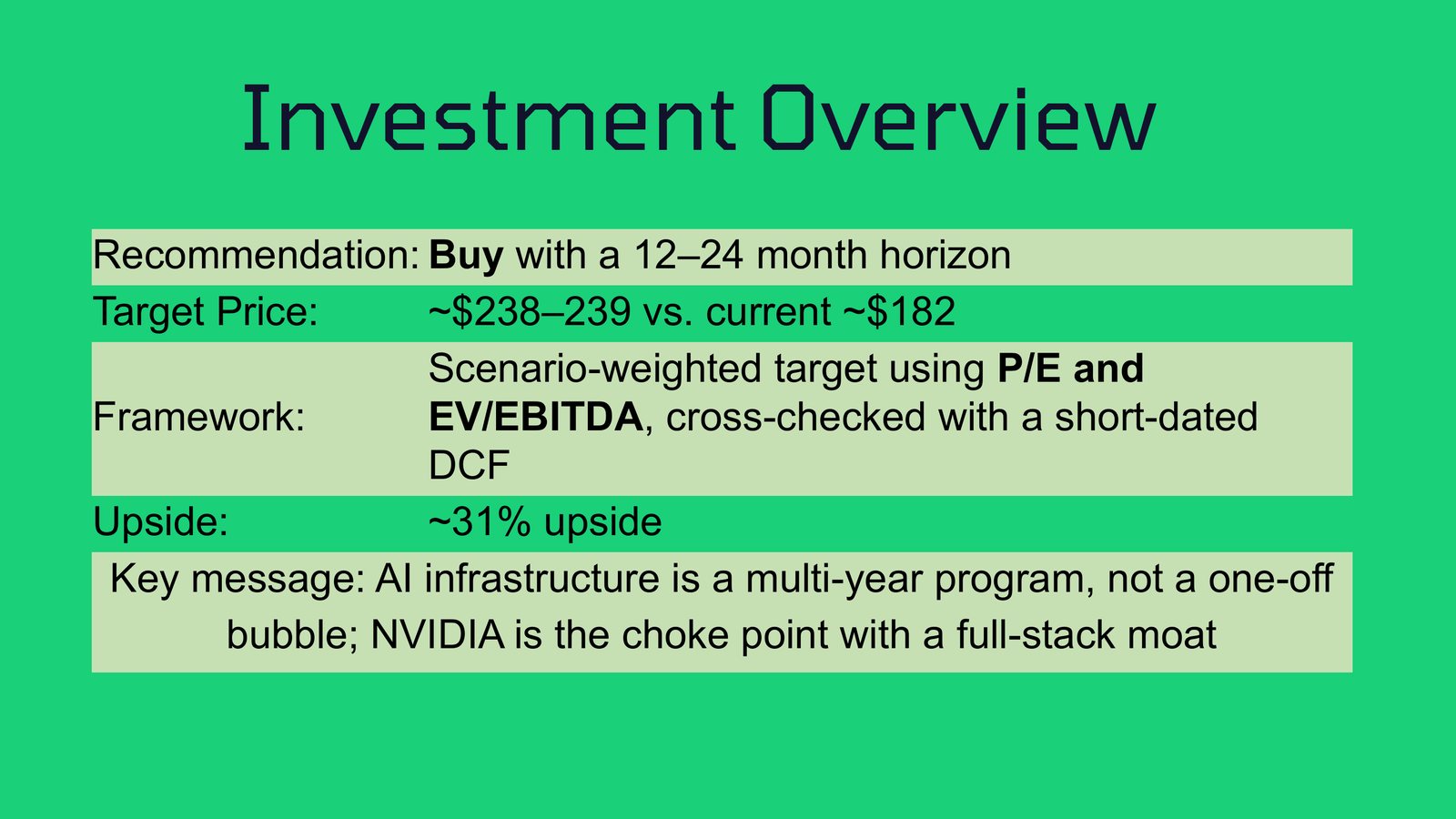
| Weighted target | $238.53 | vs. $182.31 reference price, about 31% upside |
In my words
I completed this project in my Applied Equity Research class and presented the thesis to a panel of real-world investors, including Ricky Sandler. I enjoyed combining industry research, expert conversations, modeling, and valuation into one investment view. More than anything, it gave me experience defending a thesis in front of people who evaluate investments professionally.
Documents
If the preview does not load on your device, open the PDF in a new tab.
- NVIDIA pitch deckPDF · 19 slides · PowerPoint available
- Final research memoPDF · 5 pages · as submitted, Dec 2025
- Investment memo (summary)PDF · 4 pages
- Financial modelPDF printout · Excel model available
- Valuation workbook: DCF, comps, precedent deals, LBO and football fieldExcel · street vs. management cases, SOFR-based LBO with IRR sensitivity
Figures reflect the conclusion and market reference point used in the original 2025 academic analysis. This is portfolio evidence, not current investment advice.